
ABOUT HANGUL
Discover the Beauty of Hangul
The Korean alphabet, where thoughtful design meets language, culture, and creativity.
01 / THE STORY OF HANGUL
A Writing System Created for Everyone
Hangul, the Korean alphabet, was created in 1443 under the leadership of King Sejong the Great and introduced to the public in 1446.
Originally called Hunminjeongeum, meaning “The Proper Sounds for the Instruction of the People,” it was designed to make reading and writing more accessible.
At a time when written communication depended heavily on Chinese characters, Hangul offered a writing system designed specifically for the Korean language.
Its thoughtful creation reflects a remarkable idea: written language should be accessible to everyone.
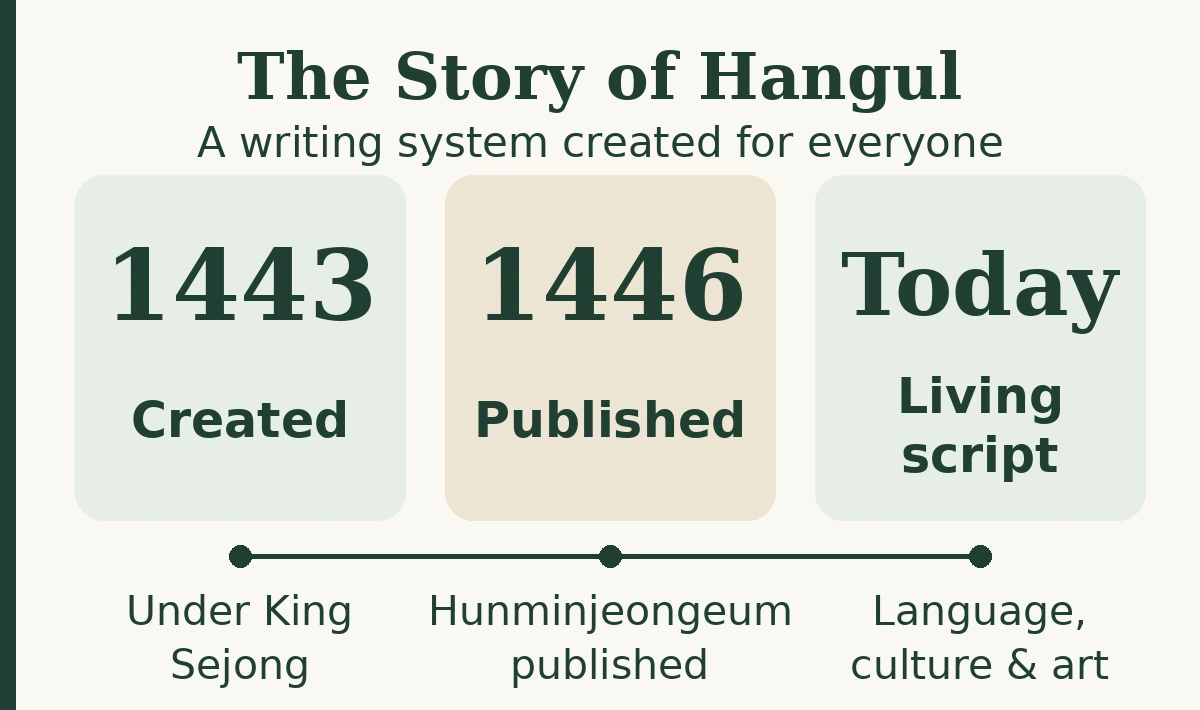
1443 — Created
1446 — Published
02 / THE HANGUL ALPHABET
Simple Shapes, Meaningful Sounds
Modern Hangul is built from 24 basic letters: 14 consonants and 10 vowels.
Its consonant designs are rooted in the shapes of the speech organs, while its original vowel principles draw inspiration from heaven, earth, and humanity. Together, these simple visual elements form a flexible and expressive writing system.
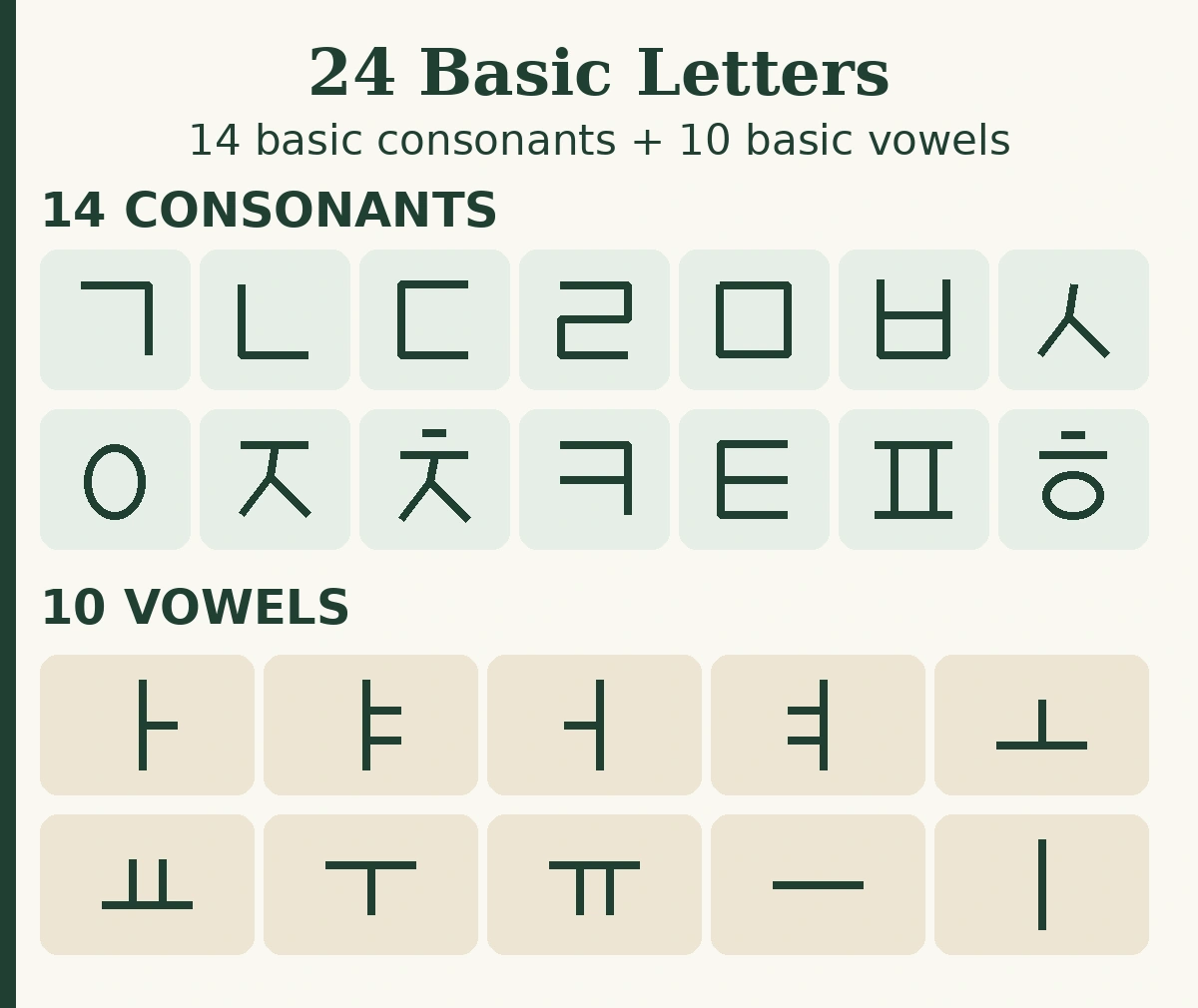
14 consonants
ㄱ ㄴ ㄷ ㄹ ㅁ ㅂ ㅅ ㅇ ㅈ ㅊ ㅋ ㅌ ㅍ ㅎ
10 vowels
ㅏ ㅑ ㅓ ㅕ ㅗ ㅛ ㅜ ㅠ ㅡ ㅣ
03 / HOW HANGUL WORKS
Letters Become Syllables
One of Hangul’s most distinctive features is the way letters come together in syllable blocks. Rather than appearing only in a straight line, consonants and vowels are arranged into compact visual units.
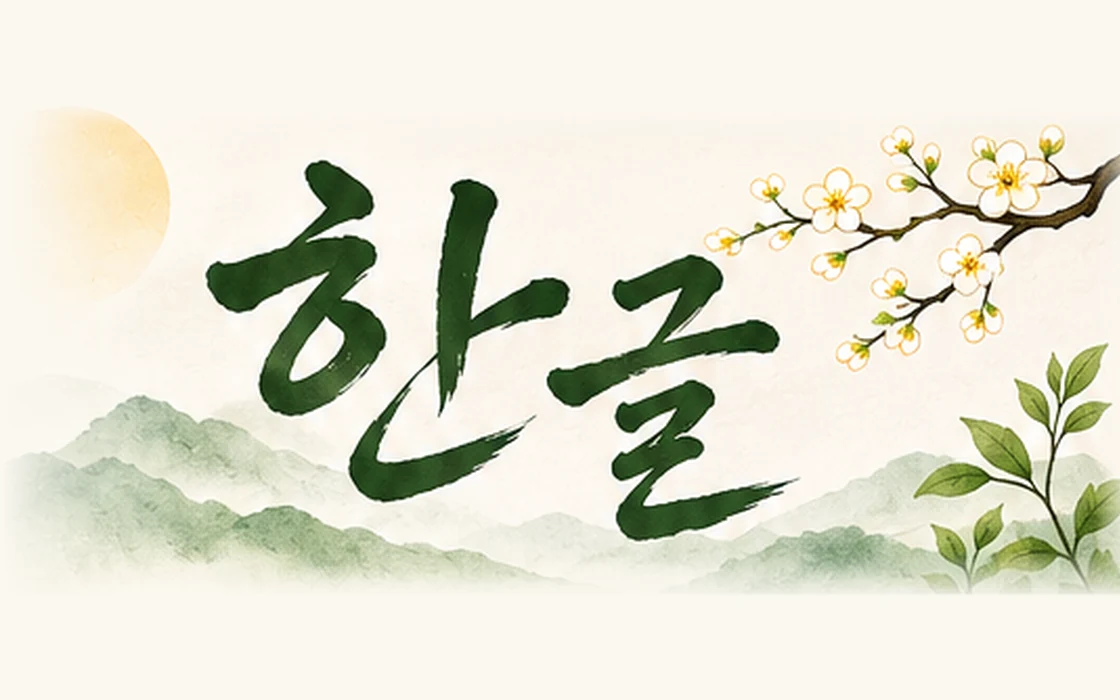
For example, ㅎ, ㅏ, and ㄴ combine to form 한. When 한 joins 글, the result is 한글 — Hangul. Each block brings individual sounds together into a unified shape, creating the visual rhythm of Korean writing.
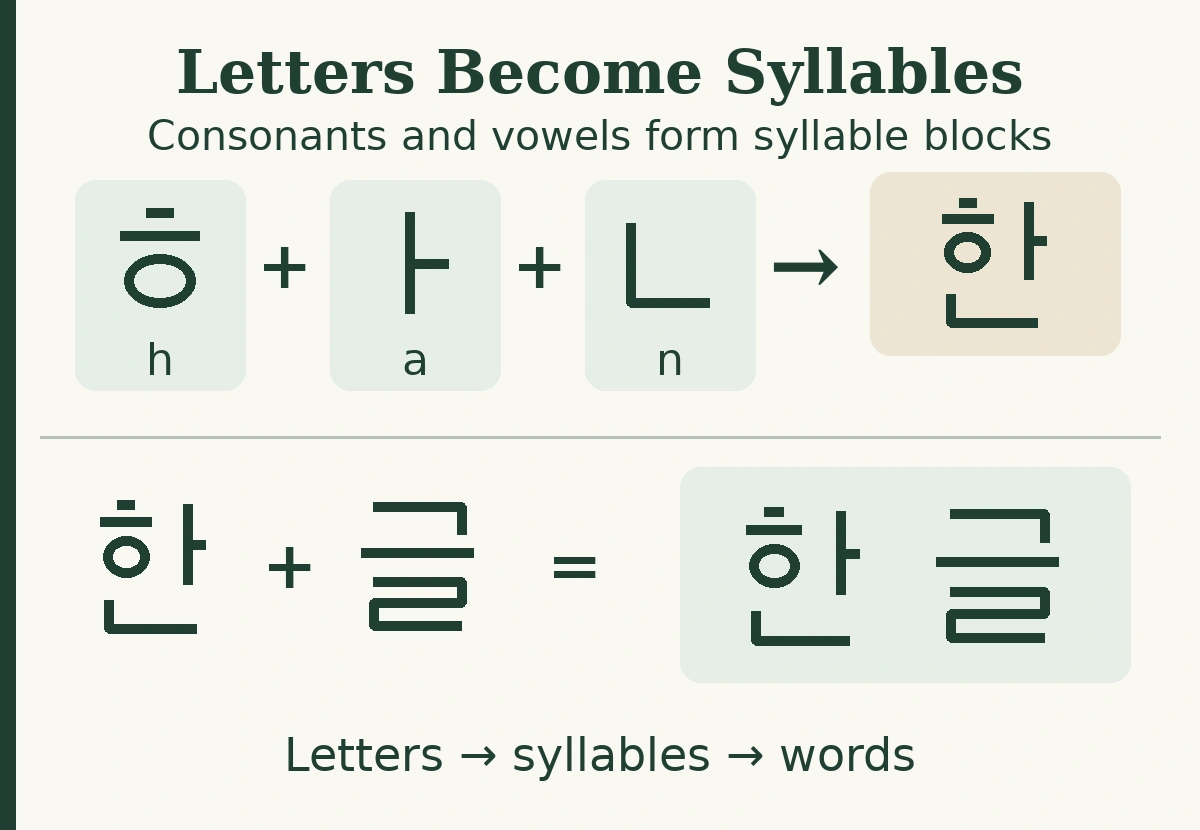
ㅎ + ㅏ + ㄴ = 한
한 + 글 = 한글
04 / THE ART OF HANGUL
From Letters to Art
Hangul is not only a practical writing system. It is also a beautiful source of artistic inspiration.
Its balance of straight lines, curves, circles, and geometric forms offers endless possibilities for visual expression. From traditional brush calligraphy to contemporary typography, Hangul can be bold or delicate, playful or elegant.
At HangulNamu, we explore this creative potential through Hangul-inspired designs that draw on language, nature, emotion, and culture. Our four collections—Korean Words, Short Phrases, Long-form Designs, and Graphics—offer new ways to experience Hangul through art.
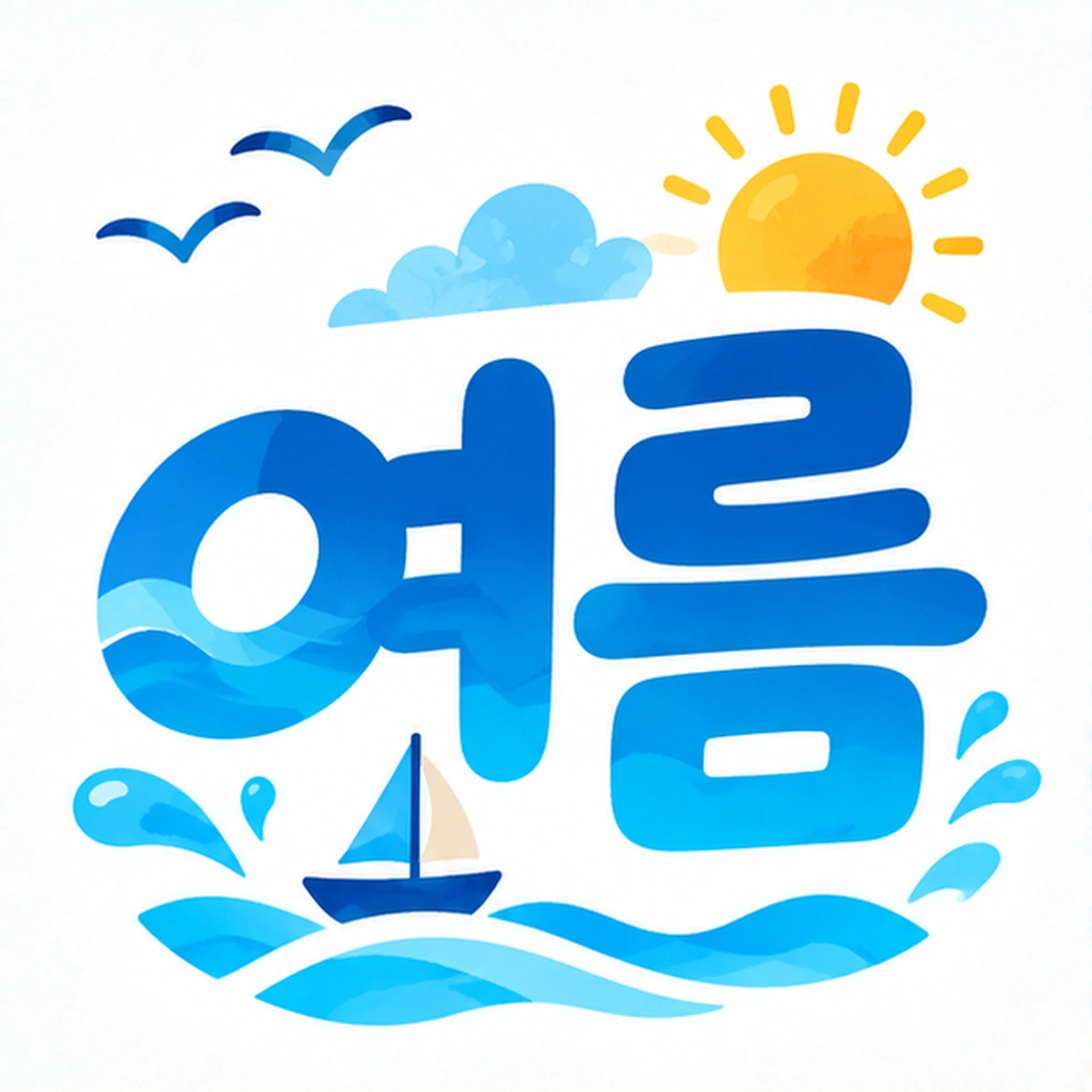
Summer · 여름
Ocean Waves

Autumn · 가을
Squirrel & Acorn

Winter · 겨울
Cozy Knit
Discover Korean Words Through Art
Every Korean word has its own sound, meaning, and character. Explore our Korean lettering examples and free AI art prompts, then create your own artwork inspired by the beauty of Hangul.
Learn more about Hangul: National Hangeul Museum · UNESCO Memory of the World